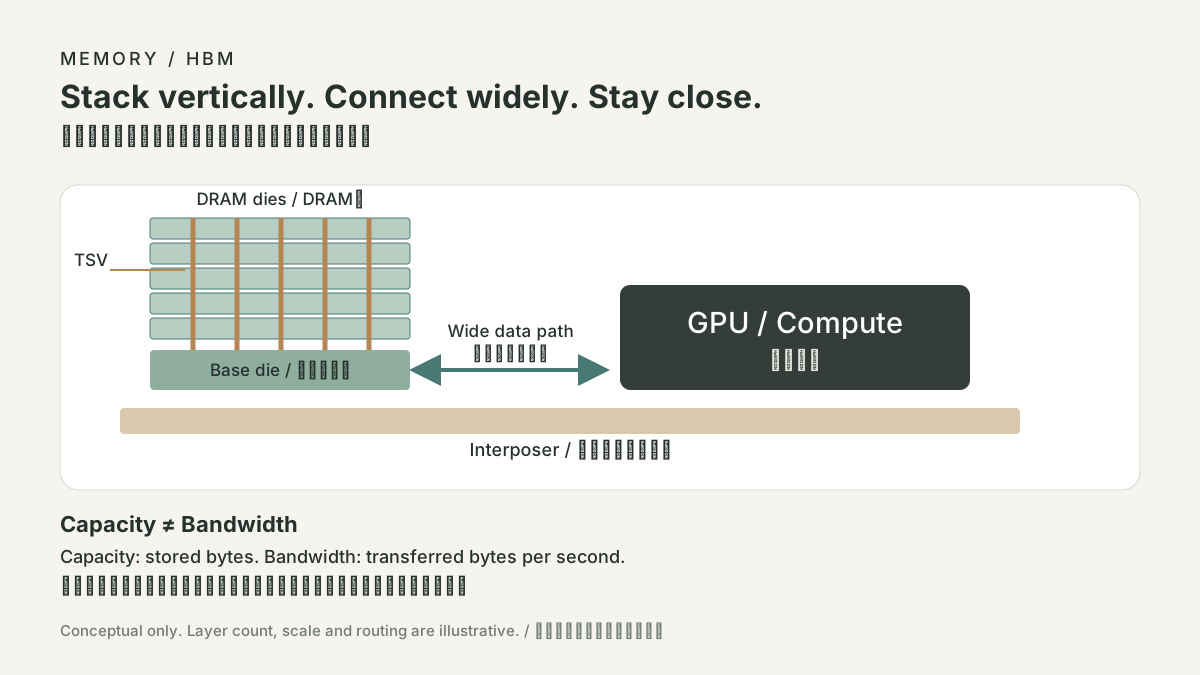
The boundary in this chapter
HBM demand is constrained by more than DRAM wafers: TSV processing, die stacking, base die, interposer or substrate, bonding, thermal paths, test, and system qualification all have yields. The object of study is advanced packaging, not a ticker shorthand. Begin by separating a workload requirement from a component specification, a supplier announcement, a customer qualification, and an accounting outcome. Those are connected but they occur on different clocks. A technical page can establish vocabulary; an issuer filing can establish a period-labelled number; neither alone establishes a durable economic outcome.
- 1workload and data movement
- 2memory interface
- 3package or NAND process
- 4qualified output
- 1qualified output
- 2customer acceptance
- 3period accounting
- 4cash conversion
- 1new evidence
- 2revise one causal link
- 3keep or invalidate the thesis
Mechanism
A package is a multiplicative process. If each independently required stage has yield y, package yield is the product of those yields; one weak stage can dominate output. The formula is a teaching model, not a disclosed yield. SK hynix HBM4 and TSMC is a primary source for the specific company or technical boundary in this chapter. SK hynix HBM4 development and Micron HBM white paper provide comparison context; they are not independent benchmarks. The correct comparison asks whether the interfaces, process stage, reporting period, and measurement conditions match. For example, an HBM announcement and a NAND filing should not be forced into a single “AI memory” growth rate.
A useful systems calculation is intentionally simple. Output equals starts times yield times test-pass rate times customer-acceptance rate. The equation does not estimate any company’s output. Its purpose is diagnostic: if a reported demand signal is strong while recognized revenue lags, which term could be binding? A qualified part can still wait on package assembly, test capacity, firmware validation, a board-level thermal result, or contract acceptance. Write the missing measurement beside the hypothesis instead of filling it with a proxy.
Business reading discipline
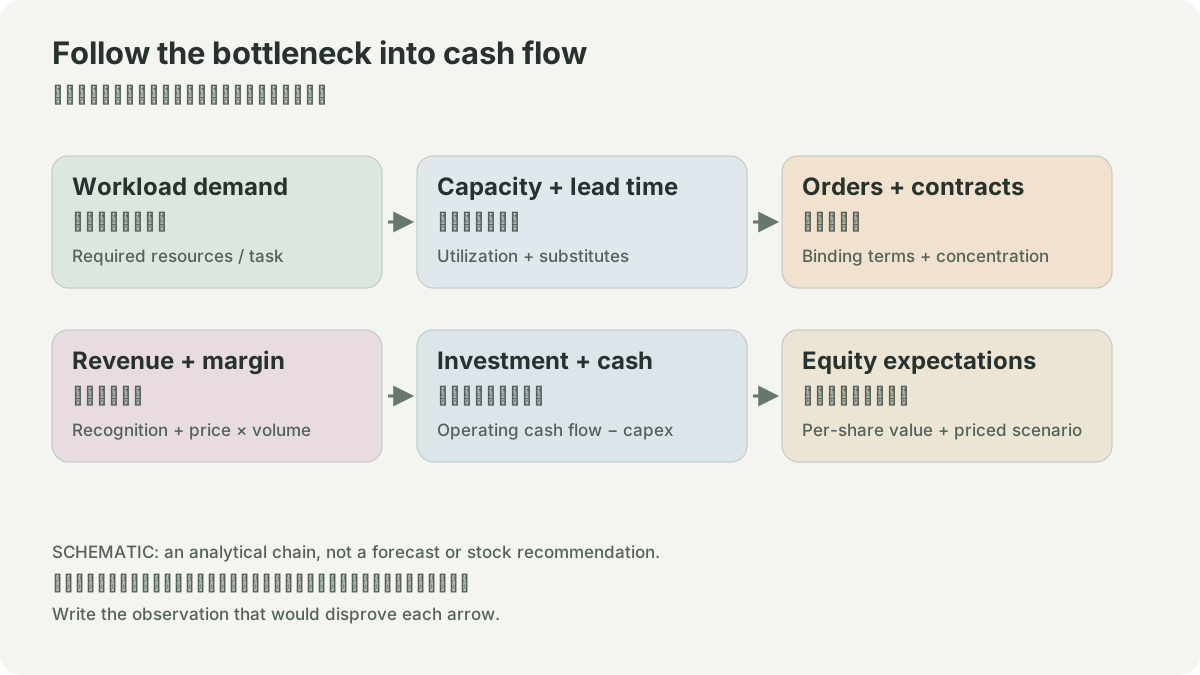
The business value of a memory component depends on where it sits in a system and what can substitute for it. Bandwidth near an accelerator, persistent capacity behind a controller, and process tools used in fabrication are different sources of value. Revenue is not interchangeable with gross profit; gross profit is not cash flow; an announced capital plan is not a delivered tool; an announced product is not a qualified volume shipment. Use filings to label fiscal period, currency, units, GAAP status, and accounting definition before comparing values.
Draw the package flow and make every handoff carry a test criterion, owner, and rework decision. Then identify whether the limiting observation is starts, yield, test throughput, or customer qualification. This exercise should produce a page that another reader can audit. Record the URL, publication date, access date, page or filing section, and the narrow claim supported. Put vendor statements in one column and independent measurements in another. This is an offline research exercise, not a recommendation, purchase, or deployment test.
Counterevidence and update rule
The thesis changes if a dated source changes a relevant interface, qualification status, reported inventory, cash-conversion fact, segment definition, or process-capacity assumption. An undated index page is not a release date. A company statement is evidence of that company’s statement, not proof about a competitor. The sources here were accessed on 2026-10-04; where a source has no displayed publication date it remains unknown. Keep the system map current by changing the one causal link that new evidence actually addresses.
ROOFLINE / HYPOTHETICAL INPUTS
Does memory feed the compute?
Upper bound = min(compute ceiling, bandwidth × arithmetic intensity). Decimal TB = 10¹² bytes. Cache effects, access patterns, communication and actual utilization are omitted; this is not a device benchmark. More capacity does not necessarily increase bandwidth.
SOURCES
01YOUR NOTES