Onsite generation moves the boundary; it does not remove it
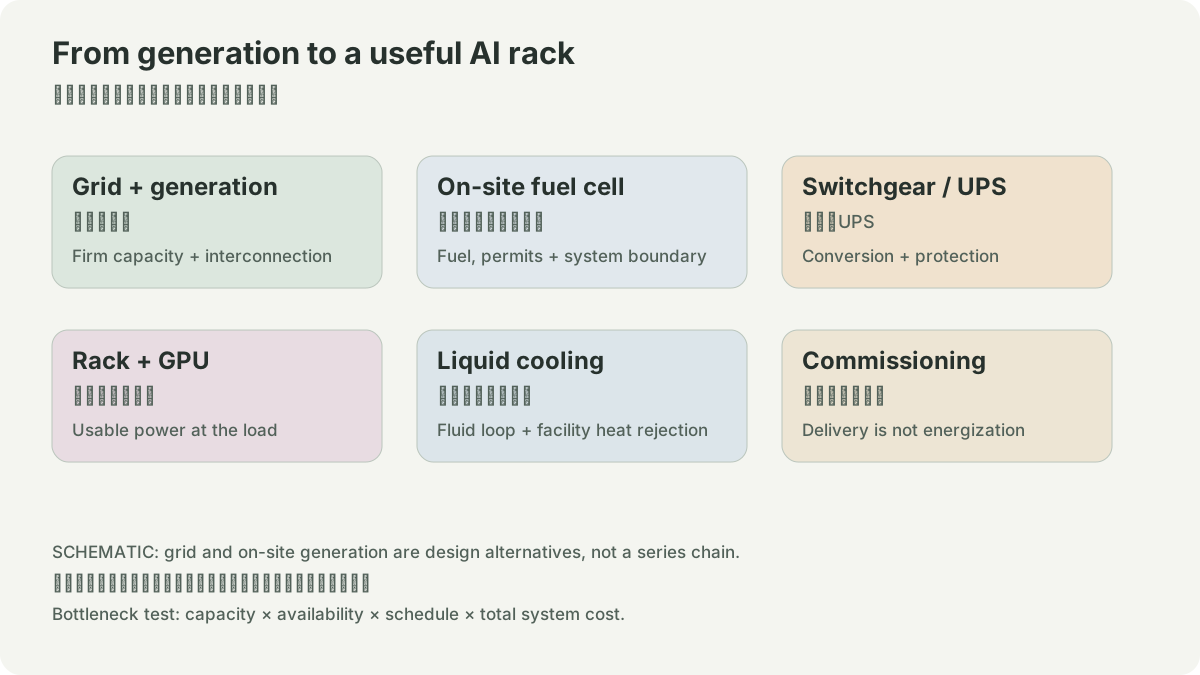
An onsite generator can change when a campus receives usable power, but it creates a fuel and environmental operating boundary. Natural gas needs a physical delivery path, pressure and quality specification, capacity reservation, price terms, and interruption rules. The site may need air construction and operating permits, emissions monitoring, noise and land-use approvals, and a plan for maintenance or emergency operation. Those requirements vary by technology and jurisdiction; a generic market report cannot replace the relevant permit authority.
Bloom describes natural gas, biogas, and hydrogen as possible fuels for its solid-oxide platform, while its filed risk discussion includes regulatory compliance and supply dependencies (10-K). This is a company description of capability and risk, not proof of a site’s fuel mix or lifecycle outcome. The EPA’s Title V overview explains the federal operating-permit framework for major stationary sources, but whether it applies is fact-specific (EPA).
Use boundaries that can be tested
Separate direct stack emissions, electricity displaced or purchased, upstream extraction and methane assumptions, fuel transport, renewable-gas attributes, and any carbon capture claim. A renewable-gas certificate is not the same assertion as physically delivered renewable gas. Hydrogen’s emissions depend on how it was produced and delivered. Non-combustion describes a conversion process; it does not, by itself, settle every air-pollutant or greenhouse-gas question.
The practical audit is a five-document set: fuel contract; interconnection agreement; air permit; meter plan; and maintenance/backup plan. For each, record the responsible party, date, term, measurement point, and failure consequence. Ask whether the facility can operate during a gas curtailment, whether backup generators have a separate permit, and whether claimed emissions use an average-grid, marginal-grid, or lifecycle comparison.
Economics have the same boundary problem
Comparing grid power with fuel-backed onsite power means matching energy price, demand charges, fixed capacity charges, fuel transport, maintenance, taxes, renewable attributes, financing, outage cost, and emissions compliance. A favorable gas price at one location does not travel to another location. A supplier estimate can be useful as a hypothesis, but it is not an independent benchmark unless all inputs and boundaries are made comparable.
Exercise
For a hypothetical 30 MW site, make a permit-and-meter register. Include fuel inlet, electrical output, auxiliary use, stack emissions, maintenance outages, and backup generation. Label each row as measured, contracted, permitted, or assumed. The register is more decision-useful than an unqualified “clean power” label.
Community and operating costs belong in the same register. Noise, water, local air quality, construction traffic, and electricity-rate concerns can change the permitting path even where a fuel contract is available. Treat public concern as a site-specific permitting question with dated records, not as proof that approval will be granted or denied.
Review the register at every design change. A larger unit, different fuel blend, revised operating hours, or modified backup arrangement can change the factual basis on which a permit or fuel commitment was evaluated.
- 1fuel supplier
- 2pipeline or delivery
- 3onsite generator
- 4electricity meter
- 1air permit and emissions measurement
- 2operating authority
- 3compliance evidence
- 1provider claim
- 2disclosed boundary and assumptions
- 3comparable result
POWER / HYPOTHETICAL INPUTS
IT power is only part of facility energy.
Annual energy = IT MW × PUE × 80% load factor × 8,760 hours. PUE = facility energy / IT energy. This planning example ignores seasonal changes and availability; it does not establish grid connection, fuel consumption or generation efficiency.
SOURCES
01YOUR NOTES