Earnings do not fund a project by themselves
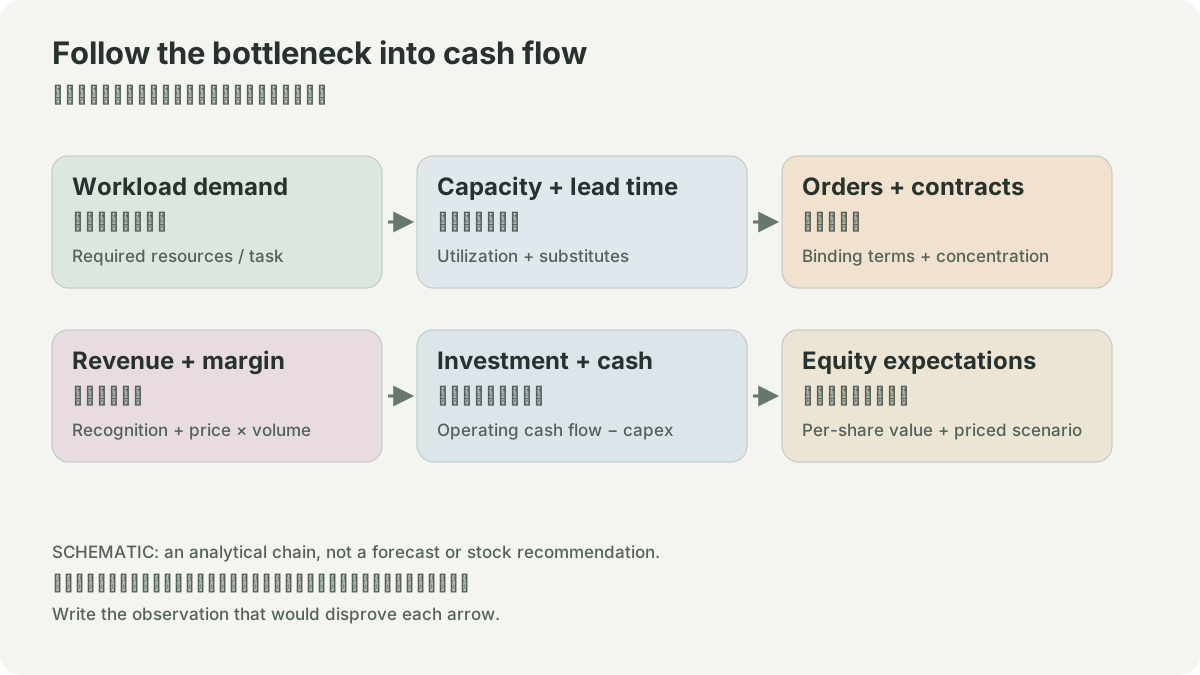
For an equipment and services company, the cash question is chronological. Components, labor, customer deposits, receivables, inventory, warranty, debt service, and equity compensation can move at different times from revenue recognition. A profitable quarter can absorb cash while inventory and receivables grow; a cash increase can come from financing rather than operations. The answer is in the cash-flow statement and notes, not in a single adjusted-profit headline.
Bloom’s March 2026 10-Q reports $73.6 million of operating cash flow for that three-month period and separately describes debt and liquidity (10-Q). The filing is a dated measurement, not a run-rate forecast. Its June-quarter 10-Q is a separate period with its own balance-sheet and cash-flow boundaries (Q2 filing). Keep both the period and the unit—thousands or millions—beside every number.
Reconcile operating cash before interpreting it
Start with net income, then identify non-cash charges and working-capital movements. Receivables rising can mean revenue was recognized before collection; inventory rising can reflect expected production or a supply burden; deposits and contract liabilities can fund work before revenue. None of these explanations is automatic. The notes must establish the material driver.
Next split investing and financing cash. Capital expenditure, project assets, and equipment purchases are investing questions. Convertible notes, credit facilities, debt repayment, shares issued, employee awards, and equity raises are financing questions. A prospective project-finance framework is not cash on hand and should not be treated as an unconditional customer order. A reported financing capacity may have investment criteria, project criteria, counterparties, and draw conditions.
Dilution is a claim on the denominator
Dilution analysis requires the actual share count and instrument terms. Basic shares, diluted weighted-average shares, options, restricted stock, convertibles, and any anti-dilution treatment apply to different calculations. Do not multiply a headline share price by a stale share count, and do not assume every convertible converts on identical terms. Read the conversion, maturity, interest, call, and settlement provisions in the filing.
An illustrative model makes the distinction concrete. Suppose a company spends $100 on inventory, receives a $30 deposit, recognizes $80 in revenue upon acceptance, and collects the remaining $50 later. Revenue is $80, operating cash can be negative $20 before other items, and project economics are still unknown. This toy example is not Bloom guidance or a forecast.
Exercise
Make a funding bridge for one filing: opening cash, operating cash flow, investing cash flow, financing cash flow, and closing cash. Add a second bridge for potential dilution: basic shares, disclosed instruments, and unanswered conversion terms. Do not fill the unanswered cells with estimates.
Keep a separate evidence date for every bridge. A cash figure belongs to a reporting date; a financing announcement belongs to its announcement date; a commitment belongs to its contract date. This prevents a later capital raise from being silently attributed to an earlier quarter. It also keeps an analyst from counting the same funds as operating cash, a financing facility, and available project capital.
- 1orders
- 2inventory and deposits
- 3delivery and acceptance
- 4receivables
- 5collection
- 1operating cash flow + investing cash flow + financing cash flow
- 2period-end cash
- 1debt and equity instruments
- 2terms
- 3potential dilution scenarios
POWER / HYPOTHETICAL INPUTS
IT power is only part of facility energy.
Annual energy = IT MW × PUE × 80% load factor × 8,760 hours. PUE = facility energy / IT energy. This planning example ignores seasonal changes and availability; it does not establish grid connection, fuel consumption or generation efficiency.
SOURCES
01YOUR NOTES